Monday, August 25, 2014

Eve's Salad

Irish Cooking can also be found at The Petit Chef and Pinterest.


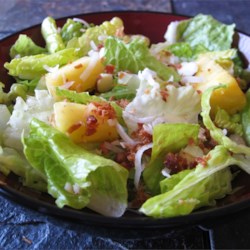
This is a family-favorite salad. It is served so much in my home for family dinners that it is called the house salad. I serve it with a choice of homemade blue cheese, ranch, Russian, or Italian dressing. My pick is the ranch as I think that best brings out all the flavors. This post is dedicated to my niece Eve Paige Morrison Boone. She likes this salad so I thought I would name it Eve's Salad and tell you a little about her. She is a wonderful young woman with two beautiful children Charlotte and Wesley.

Eve was a wonderful child and has grown into a beautiful young woman--inside and out.  She and her daughter Charlotte O'Brien Boone [named after my mother Charlotte O'Brien] both share a love of horses.  Eve had horses when she was a young girl, belonged to Pony Club, and passed that love of the equine on to her daughter.  Charlotte is now only five and taking lessons. Wesley Paul is named after my father Paul. Here are some photos of Eve with her children.


EVE'S SALAD

[Serves 8 for a dinner salad, 3 for an entrée; this recipe can easily be halved]

Ingredients:

Baby greens, enough to fill two large platters
1 fresh pineapple or two cans of pineapple slices, reserve juice
4 avocados
6 boneless chicken breasts
One large jar of sweet and salty mixed nuts
[I prefer the 12 oz. Emerald® Sweet & Salty Mixed Nuts with Glazed Walnuts]
18 slices of crispy bacon
Salt and pepper to taste

Directions:

Arrange the ingredients on the platters in this order: greens, pineapple cut into large bite-sized pieces, chicken also cut into large bite-sized pieces, avocado slices, bacon cut into large bite-sized pieces, nuts, and drizzle the pineapple juice on top. Season to taste. Serve with dressing of choice, but if you like ranch, I think it enhances the flavors better than other dressings.

This recipe is one I also got from Rena Grebert.  I added a few ingredients, but the base is the same.  The original recipe is the Chicken, Pineapple, and Walnut Salad which can be found in the Salads Category of this blog along with a wonderful story of the first time I had this dish at a luncheon at Rena's house.
Bailey's Irish Cream Cheesecake

Cooking Irish can also be found PETITCHEF and Pinterest.


My children Erin and Eli on the front steps of the Haven Hotel in Dunmore East 1985.


I had a version of this at the Haven Hotel in Dunmore East, County Waterford. I think this is my favorite fun hotel in Ireland. It is a beautiful, family-owned inn situated in a picturesque fishing village on the Waterford Harbour. A stay is a must for any tourist or just enjoy dinner. Renowned worldwide for its beauty and tranquility, Dunmore East has it all, whether you want to fish, angle, golf, surf, ride, sail or just sunbathe and relax on one of Dunmore East's many sandy beaches. 


I'm a New York girl, and I do love Junior's cheesecake, but this Irish version is yummy too. Have a piece and envision yourself at the beautiful inlet of Dunmore East. Transport yourself to the veranda at the Haven Hotel. You will never want to leave. 


Bailey's Irish Cream Cheesecake


Ingredients


Crust 


1 c. flour 
1/4 c. sugar
1 tsp. lemon peel
1/2 tsp. vanilla 
1 egg yolk 

3/4 c. softened butter 

Filling 


5 8 oz. pkg. cream cheese room temperature
1 1/3 tsp. orange peel 
1 3/4 c. sugar

3 T. flour 
1/4 tsp. vanilla 
1/3 c. Bailey's Irish Cream 
5 eggs
2 yolks
1/4 c. heavy cream 


Whipped Bailey's Irish Cream


2 c. heavy or whipping cream 
1/4 sugar 
2 T. Bailey's Irish Cream 


Directions:


Combine all ingredients for crust. Take 1/3 of crust and spread over the bottom of a large 9-inch spring-form pan. Bake in a 400° preheated oven for 6 to 8 minutes until a very light golden brown. Place top of spring-form pan onto the bottom crust and shape the remainder of the crust along the sides of the pan leaving one inch at the top. Combine all filling ingredients into a separate large mixing bowl. Mix fully using medium speed. Pour into crust, and it should come to the top of the crust. Bake at 500° for 10 minutes and then reduce to 250° for one hour. Cool for four hours before adding topping: 
powdered chocolate or chocolate curls. Refrigerate. Follow timing and temperatures exactly to avoid cracking of the top. 


Add the cream into a small, deep mixing bowl, and whip quickly with a wire whisk until slightly thickened. Now add the sugar and Bailey's. Continue to whip only until soft peaks form. You can also use an electric hand mixer. Just mix again until soft peaks form. 


To Plate


Take out of refrigerator so cheesecake can warm to room temperature before serving. Generously dollop each slice with Whipped Bailey's Irish Cream. Garnish with fresh raspberries. 

Traditional Irish Breakfast

The Irish Cook can also be found at The Petit Chef and Pinterest.

All receipes are on Petitchef
It is often said that the modern traditional Irish breakfast is what the Irish cook truly does best. And I agree. In the North it is called the Ulster Fry and usually includes potato bread [recipe included on this site.] If you are visiting for a week or more, you probably will not want to eat so much fat and cholesterol every day so now many Irish B&B owners will offer cereals and toasts and more nutritional breakast items. In the 80s the breakfast fry was usually consumed by the Irish at least once a day whether at breakfast, lunch,or dinner.


                            At St. Patrick's in Dublin 1984

I love this breakfast, but it cannot truly be duplicated here in the U.S. Whenever friends visit Ireland, I make sure they bring back quantities of Irish sausage, bacon, white pudding, and black pudding. You would need to order these items online or at a local Irish shop. I'm lucky, where I live there are Irish shops in Lake George and Saratoga. If you order online most of their products are made in the U.S. with Irish seasonings and are very similar to the original. I do not order from Tommy Maloney's anymore. The sausage was completely out of its packaging and loose amongst the other items I had purchased. I received no answer and no satisfaction when I called and emailed about the condition of the box upon arrival. I was forced to throw the sausage out and was out its cost, and more importantly, my guests that year did not get to experience and enjoy authentic Irish sausage.

The breakfast begins with Irish oatmeal and orange juice. Irish oatmeal uses steel cut oats. Then on to the brown bread, [There is a recipe on this blog, but you cannot bake real brown bread unless you purchase the course Irish flour online as it is unavailable in the States.] eggs, meats, tomatoes, mushrooms, and, of course, Irish breakfast tea--a post on Irish teas. That's it.

I always serve this traditional breakfast to my guests visiting for St. Patrick's Day. It is truly more Irish than corned beef and cabbage though they have that for dinner. With Reubens or the Reuben casserole [both recipes on this blog] the next day, they do not leave hungry!

The Irish breakfast is what I miss most about living in Ireland though I do not miss their orange juice. Living in more rural Ireland, I had to go to another town to find American frozen cans of OJ, and they were frost-encrusted at the bottom of the freezer and VERY expensive. Irish orange juice in the 80s came in a box about the size of chicken broth. It was not refrigerated and incredibly bitter--no sweetness at all. It always tasted spoiled. YUK to that taste memory.

The Irish stoves, called cookers, in the 80s had the most convenient broiler/toaster so the brown bread was fantastic under the broiler with a wonderful, creamy Irish butter like Kerrygold. You can purchase Irish butter at most U.S. supermarkets now. To order the sausage, rashers, white and black puddings, and Barry's tea visit http://www.foodireland.com/Merchant2/merchant.mvc?Screen=PROD&Product_C ode=spi201.

To purchase brown bread mix visit any Irish specialty store or purchase Hogan's brown bread mix online at http://www.shop.com/Hogans+Brown+Irish+Soda+Bread+Mix-39101974-51829146 -p+.xhtml?sourceid=298.
Irish oatmeal can be purchased in most grocery stores or purchase McCann's Irish Oatmeal online at

For novices, the Irish rasher is Irish bacon, and it is not crisp like our bacon--more like ham or Canadian bacon but shaped almost like a chop though thin. Black pudding used to be called blood pudding because the blood is added to the white pudding.
I found this article on www.ehow.com. I have added a few items not mentioned for a complete Irish breakfast experience. You would not want to consume this every day like the Irish, but for a special occasion, it cannot be beat if you like a fried breakfast.

How to Serve a Traditional Irish Breakfast 
by eHow Food & Drink Editor

Introduction:

Breakfast is, hands down, the meal that the Irish do best. Get into the St. Patrick's Day spirit by cooking this traditional Irish breakfast for your family.

Instructions: [Difficulty: Moderate]

Step One: Set the table with a clean white tablecloth and cloth napkins. On the table have teacups, small juice glasses filled with fresh squeezed orange juice, real cream, sugar, warm freshly baked brown bread, and butter.
Step Two: Brew up a big pot of Irish breakfast loose-leaf tea and serve it as soon as everyone sits down at the table. [recipe on this blog.]
Step Three: Serve your family bowls of hot Irish steel cut oatmeal while you are cooking the rest of the breakfast.
Step Four: Fry several slices of Irish rashers (cooked soft, not crispy like American bacon) and sausages and then put them aside under a towel.
Step Five: Next cut several cherry tomatoes in half and fry them with black breakfast pudding, white pudding, and button mushrooms in the fat from the bacon and sausage.
Step Six: Fry the eggs last. Arrange all the food decoratively onto plates and serve it all at once.
Step Seven: Let your family eat until they are full to bursting. If they are unable to finish, you will know you have served a proper Irish breakfast.

Tips & Warnings:

If it seems like you are making more food than you need, you are on the right track. Irish breakfasts are huge and meant to last you well into the day.

Things You Will Need:
Irish Rashers  
Irish Black Pudding
Irish White Pudding
Irish Sausage
Irish Butter
Cream
Eggs
Freshly-squeezed Orange Juice
Brown Bread Mix [Hogans® or Odlums®]
Loose-leaf Irish Breakfast Tea
Irish Steel Cut Oatmeal
Cherry Tomatoes
Button Mushrooms
White Tablecloth And Napkins
Irish Teapot and Tea Cozy

I hope you and your family and guests enjoy this uniquely Irish breakfast as much as the Irish do. One of my favorite things is having warm brown bread and sausage for a weekend breakfast! It takes me back to my Georgian townhouse on Pinebrook in Trim in the mid-80s.

Sunday, August 24, 2014

Irish Breakfast Potato Bread


The Irish Cook can also be found at The Petit Chef. 

All receipes are on Petitchef

We decided to tour a bit of Northern Ireland before taking the ferry from Belfast to Stranraer, Scotland to tour Scotland, Wales, and England. We stayed at a Belfast bed and breakfast in a beautiful old four-story Victorian home. The proprietor was an older woman who was very proud of her potato bread. It is true that this is more a northern dish and no respectable Northern Irish cook would serve the traditional Irish breakfast without it, whereas it is seldom seen in the republic.

The potato bread is not one of my favorites, but I thought if I was doing a post on the traditional Irish breakfast, I should be thorough and fair and include the pride of the northern counties. This is one of those recipes that can be great or mediocre depending on the one you select. There are many variations on the potato bread with some recipes making more of a potato dish like a hash brown, some like a potato pancake served with syrup--called a potato farl, and others more of a bread that can be toasted or fried in butter. This is a bread recipe, and one of the better ones I have found.


Potato Farl


                                         Potato Bread


This was our first sojourn to the north, and we did not know what to expect.  Remember this was in the mid-80s when there was still turmoil.  We decided to get a bite to eat before we settled into our B&B.  After supper, we could not find our way back. We started driving around the city and did not realize the city roads were regularly closed at night.  Every turn we made was blocked with barricades and Royal Ulster Constabulary (RUC) officers. It was rather threatening to say the least.  On our return trip we experienced a very unnerving situation with rifles aimed by the RUC.  I will detail that in another post.

Although the County Borough of Belfast was created when it was granted city status by Queen Victoria in 1888, the city continues to be viewed as straddling County Antrim and County Down. It is the largest urban area in the Province of Ulster, and the second largest city on the island of Ireland. Historically, Belfast has been a center for the Irish linen industry, tobacco production, rope-making, and shipbuilding: the city's main shipbuilders, Harland and Wolff, which built the ill-fated RMS Titanic, propelled Belfast on to the global stage in the early 20th century as the largest and most productive shipyard in the world.

The city suffered greatly during the period of disruption, conflict, and destruction called The Troubles, but later has undergone a sustained period of calm and substantial economic and commercial growth.  Nearly half of the total deaths in the conflict occurred in Belfast. However, since the Good Friday Agreement in 1998, there has been significant urban regeneration in the city center with the newly developed Victoria Square area attracting international attention.


My daughter Erin Megan in a park in the North.

There are many variations online of this bread, but I thought I would include a more traditional one. I found this recipe at FabulousFoods.com:http://www.fabulousfoods.com/recipes/article/43/17754.

Irish Breakfast Potato Bread Servings: Two Loaves

Author's Notes: 

This bread provides a wonderful way to use leftover mashed potatoes. It makes a dense, moist loaf that's perfect for sandwiches. Directions are included here for using an electric mixer or a food processor. 

Ingredients:

1/4 cup of warm water 
3 teaspoons of  yeast 
1 1/2 cups of milk
3 tablespoons of butter 
1 cup of mashed potatoes at room temperature 
4 tablespoons of sugar
2 teaspoons of salt
6 cups of flour 
1 egg for glaze

Instructions for Electric Mixer:

Pour warm water into the bowl of an electric mixer fitted with the dough hook attachment. Test it with your hand. It should feel very warm, but comfortable. Sprinkle the yeast over the water and let stand for 5 minutes. With the mixer at speed 2, slowly mix in the milk, mashed potatoes, butter, sugar, and salt. Gradually mix in the flour. The dough should turn into a ball. Continue to knead on speed 2 for 2-3 minutes until dough is smooth and elastic. If the dough does not ball up because it is too dry, add water one tablespoon at a time until it does. If the mixture is more like a batter, add flour one tablespoon at a time. Adding water or flour as needed to get the right consistency will assure the result will always be a perfect dough. Just remember to do it in small amounts.

Instructions For Food Processor: 

Pour warm water into the bowl.  It should feel very warm, but comfortable. Sprinkle the yeast over the water and and mix at low speed. Let stand for five minutes. Slowly mix in the milk, potatoes, butter, salt, and sugar. Gradually mix in the flour. Mix on high for about a minute or two. The dough should turn into a ball and roll around the processor. If the dough does not ball up because it is too dry, add water one tablespoon at a time until it does. If the mixture is more like a batter, add the flour one tablespoon at a time. Adding water or flour as needed to get the right consistency will assure the result is always a perfect dough. Just remember to do it in small amounts. 

With Either Method, Continue Here: 

Transfer the dough to an oiled bowl, cover with a clean towel, and let rise until doubled (about 1 1/2 hours). Grease 2 loaf pans and pre-heat oven to 375°. Punch down the dough and divide into two pieces. Shape each piece into loaf shape and place in greased pans. Cover pans with clean towel and let rise till doubled (about 1 hour). Use a pastry brush to brush beaten egg over the tops of the loaves. Bake for 40-45 minutes or until golden brown. Many Northern Irish cooks fry slices of the bread in that rich creamy Irish butter. 

I hope you enjoy this authentic taste of Northern Ireland.

Bunratty Irish Wholemeal Scones

Irish Cooking can also be found at The Petit Chef and Pinterest.

All receipes are on Petitchef


     Eli on the O'Brien throne at Bunratty Castle 1985 April


Bunratty Castle is a must for every tourist visiting Ireland if you want to experience all that is Irish. To miss it would be like going to America and not visiting the Statue of Liberty. If you only visit two castles, do not miss Bunratty nor Blarney. Its medieval banquet is great fun and for a tourist event, the food is surprisingly good with the music and comradery of the evening quite contagious. Everyone is Irish for one night. The wine and stout flow as freely as Irish fluidity of speech. Bunratty Castle and Folk Park is located in County Clare and very near Shannon Airport. In fact, some of the original homes were moved from the area that became a runway to become part of the park. Alongside the castle is the extensive folk park, particularly popular with families, tourists, and schools. Features are reconstructions of historical cottages and buildings, recreating the general feel of the 19th century with a period style village main street. Old tools, furniture, and artifacts are displayed, with the village kept alive by some inhabited shops, an old home bakery, and peat fires in cottages. My favorite shop is the print shop. At The Print WorksMatrix Press still produces by hand, and with great care, a wide range of hand-colored prints, inspired by the Book of Kells and the great wealth of Irish wit and wisdom. This and much, much more are lovingly created on a daily basis. When I walked in, it was love at first sight. The colors, the quality of the papers, the quotes, the pictures--all assaulted my English instructor's sensibilities. I decided I wanted a print of my favorite poem by my favorite Irish poet: "The Song of the Wandering Aengus" by William Butler Yeats.  As I began to converse with the proprieter, I was amazed to find out his name was Aengus O'Carroll who had worked with Yeats's daughter Anne Yeats in Dublin at the Cuala Press. I still have that print proudly displayed in my home, and I think of Bunratty and Aengus each time I take a lingering look. I wonder if he is still there. I found this recipe in an Irish cookbook. I do not know if they still serve them at Bunratty Castle, but I cannot wait to go back to find out.


Bunratty Wholemeal Scones 

Ingredients:


1½  cups of white flour
3 cups of brown flour*
1 large egg, beaten
1 egg white for glazing
3 tsp. of sugar
1½ tsp. of baking soda
1 tsp. of baking powder
Knob of butter [Irish term for small amount, sometimes seen as nob]
Sour milk or buttermilk


Directions:


Mix all the dry ingredients together.  Add beaten egg, and gradually stir in enough milk until dough consistency is achieved.  Knead briefly on lightly-floured board.  Roll out to 1 inch thickness.  Cut into wedge shapes, brush with egg white to glaze, and place onto a sprayed cookie sheet.  Bake in a preheated 400° oven for 20 minutes.  When you pop that scone into your mouth, you will be looking out the window of Bunratty Castle at the folk park, the estuary, and Shannon Airport.  Enjoy the trip.
*Brown flour is a specialty flour of the British Isles.  How it is made is a closely guarded secret.  It can be ordered online from Rank Hovis Limited, or you can use a brown bread mix purchased online or locally from an Irish/Celtic shop.  I have spent many hours trying to duplicate the brown flour with flours available here in the U.S.  It is impossible to achieve since the malted wheat flakes provide the unique texture and rich, nutty flavor.  I have used a combination of these three flours to achieve some success: whole wheat, whole wheat pastry, and unprocessed bran.  If you find a better combination, please let me know for brown bread is the thing I miss most about life in Ireland.  

Irish Beef Wellington

The Irish Cook can also be found at The Petit Chef and Pinterest. 

All receipes are on Petitchef

I said I would not include beef recipes on this Irish cooking blog since Irish beef was so tasteless in the 80s when we lived in Trim, Ireland--yet looked so wonderful sitting in the butchers' cases. But I cannot ignore Beef Wellington since the Duke of Wellington plays such an important role in the town of Trim where he spent his youth. Arthur Wellesley, 1st Duke of Wellington, 1769 to 1852, was an Anglo-Irish soldier and statesman, and one of the leading military and political figures of the 19th century. Wellies are named for him. Wellesley was born in Dublin but spent his youth in Trim, County Meath so he plays a prominent role in the tourist trade, marketing, and mythology of the town.  There is a Hotel Wellington, a pub called the Iron Duke, the school where he was educated, and on and on. Wellesley rose to prominence as a general during the Peninsular Campaign of the Napoleonic Wars and was promoted to the rank of field marshal after leading the Allied forces to victory against the French at the Battle of Vitoria in 1813. Following Napoleon's exile in 1814, he served as the ambassador to France and was granted a dukedom. During the Hundred Days in 1815, he commanded the Allied army which defeated Napoleon at the Battle of Waterloo.


                     Carla Mooney and I sitting in downtown Trim 1985
 

An opponent of parliamentary reform, he was given the epithet the "Iron Duke" because of the iron shutters he had fixed to his windows to stop the pro-reform mob from breaking them. He was twice prime minister of the United Kingdom under the Tory party and oversaw the passage of Catholic Relief Act 1829. He was prime minister from 1828-30 and served briefly in 1834. He was unable to prevent the passage of the Reform Act of 1832 and continued as one of the leading figures in the House of Lords until his retirement. He remained Commander-in-Chief of the British Army until his death.  So here is a great recipe for Beef Wellington. Think of the Iron Duke the next time you enjoy this dish.


Irish Beef Wellington [Serves 4]

Ingredients:

4 [6 oz.] individual beef filets
4 pastry portions [5" squares, 1/8" thick]
Brandy for marinade
2 eggs
1 T. of water
4 large mushrooms, sliced
4 T. bordelaise sauce [recipe below]
4 slices of liver pâté [recipe below]
4 oz. of grated gruyere

Directions:
 
Marinate filets in brandy overnight.  Remove and pat dry.  Beat eggs with water.  Arrange pastry squares on baking sheet and brush with the egg mixture. 
Place a slice of pâté on each square, and top with half of the mushroom slices, ½ oz. grated cheese, and ½ T. of bordelaise sauce.  Place filet on top, add ½ tsp. of sauce, ½ oz. of cheese, and remaining mushroom slices on each. Fold dough around the meat sealing completely.  Lightly brush pastry with remaining egg wash. Bake in a preheated 450° oven for 20 minutes until puffed and golden brown.

Bordelaise Sauce: [Recipe courtesy of gatewaygourmet.com]

Ingredients:

¼ cup of finely chopped shallots
1 oz. of butter
4 oz. of diced beef bone marrow or butter
¼ tsp. of cracked black peppercorn
1 sprig of fresh thyme
½ cup of red wine
1 cup of demi-glace [There is a recipe for demi-glace at gatewaygourmet.com for 2 gallons, or you can purchase Demi-Glace Gold® online available in two sizes. A demi-glace is a rich concentrated brown stock that is carefully reduced until it forms a deep meaty flavored glaze. This intensely flavored reduction is used as a base for producing wonderful, rich, velvety sauces and soups.  It is the base for dozens of classic and everyday sauces and is considered one of the 5 mother sauces. If you are going to make any classic brown sauce, you want to have a quality demi glace to start with.]

Directions:
 
Melt butter in a sauce pan and sauté shallots for approximately 2 minutes until transparent. Add red wine and reduce for 2 to 3 minutes to an essence. Add thyme and peppercorns and reduce further for  another 2 to 3 minutes until almost no liquid remains. Add demi-glace and simmer for 5 to 6 minutes until sauce begins to thicken. In a separate pan, if using the bone marrow, simmer the diced bone marrow in water for 3 to 4 minutes. Drain water and add to sauce and simmer for 2 minutes. Otherwise, add the butter to the sauce and simmer.
 
Liver Pâté: [altered recipe courtesy of Peggy Trowbridge Filippone, About.com]
 

Ingredients:
  • 3 hard-boiled eggs
  • 1 large onion, finely chopped
  • 1 medium clove garlic, crushed
  • 1/3 cup of butter or 5 T. rendered chicken fat
  • 1 tsp. sea salt or kosher salt
  • 1 pound chicken livers cooked in sherry and butter
  • 20 grinds of black pepper
  • Generous pinch of ground nutmeg

Directions:


Gently sauté onion and garlic in the butter or fat over low heat until browned, but not burned. Sprinkle onions and garlic with salt as soon as they begin to wilt. Scrape the sautéed onion, garlic, and drippings into the bowl of a food processor fitted with the metal blade. Blend until smooth. Slice the eggs in half and add the eggs, cooked chicken livers, black pepper, and nutmeg. Process until smooth. Taste and adjust seasoning, keeping in mind that flavor will increase during refrigeration. Scrape liver mixture into plastic wrap-lined bowl. Cover with another layer of plastic wrap, pressing wrap to touch the top of the pate. Refrigerate at least 12 hours or overnight.

Seafood Stuffed Tenderloin

The Irish Cook can also be found at The Petit Chef and Pinterest. 

All receipes are on Petitchef

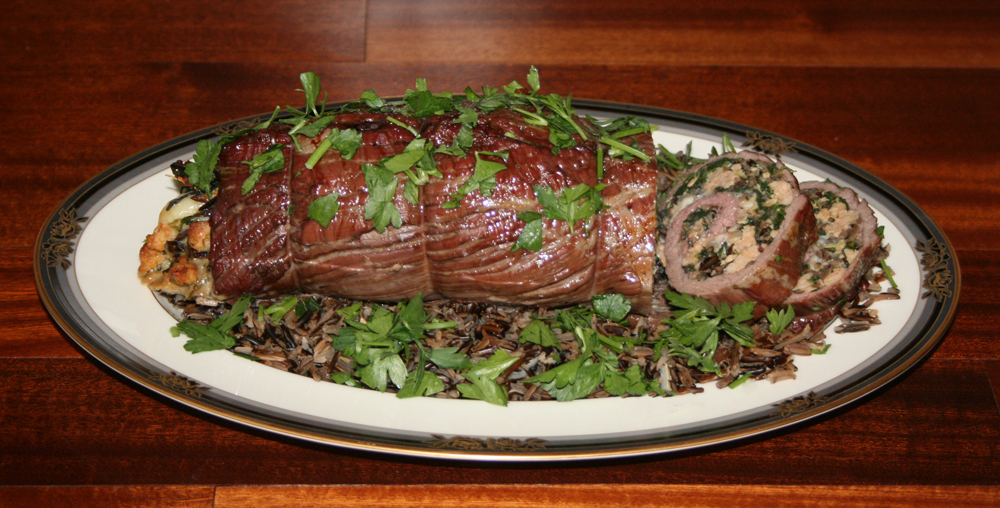
This is a simple variation of the Lobster Stuffed Tenderloin of Beef submitted by a fellow English teacher Rena Grebert for the cookbook compiled by the staff of St. Anne Institute in Albany, NY.  It was a fundraiser for the senior class, and this entry is found in the 1981 edition of Aunt Annie's Cook Book®.  I add jumbo shrimp, sea scallops, and a couple king crab legs, declawed for all the seafood lovers in my family. This was the choice selection of entrée for the Abry Christmas dinner.

Enjoy this wonderful entrée.  I always think of Rena when I prepare this dish.  She was a great teacher, great person, and an elegant lady.  Like my mother, she was of a different generation, a time gone by, and I for one am so very sad to see this elegance and refinement fade each passing day.  These women were part of that greatest generation, and I believe do not receive the admiration and acclaim they should. 


                                    At an SAI fundraiser


SEAFOOD STUFFED TENDERLOIN OF BEEF [Serves 8]

Ingredients:

4 lb. whole tenderloin of beef, butterflied    
2 lobster tails
½ lb. of jumbo shrimp, deveined and shelled
½ lb. of sea scallops
2 king crab legs, declawed
1 stick of butter, divided
Juice from half a fresh lemon
6 slices of bacon
1 cup of green onions
½ cup of white wine
1 clove of fresh garlic or garlic powder or salt if using unsalted butter


Directions:

I always purchase a larger tenderloin and have the butcher cut a four lb. filet and butterfly it to ½ inch of the end.  The remaining part is cut into 1-inch individual filets for future dinners.  It is much less expensive per pound to purchase a whole tenderloin so even though the intial investment is more, you end up with another couple of meals at no cost.

Preheat oven to 425º.  Salt and pepper the inside of the meat.  Stuff with lobster cut into pieces, shrimp, scallops, and crab.  Melt half of the butter and combine with the lemon juice.  Drizzle onto seafood.  Tie the roast securely at 1-inch intervals with cooking twine.  Drape the top with bacon slices.  Place on rack in a shallow roasting pan for 40 minutes for rare and about 50 minutes for medium.  Let rest for 15 minutes before slicing.

While the roast is cooking, melt the remaining butter in a saucepan.  Cook the sliced green onions over low heat until tender stirring frequently.  Add the wine and garlic and simmer for one minute heating thoroughly.  If using fresh garlic, allow the garlic to soften but not turn bitter.  Serve spooned over sliced meat.  Sometimes I substitute mushrooms instead of onions or a combination of both.